The Art of the Tambourine
Master technique. Discover sound. Expand your musical language.
by Dominique Talks Percussion
A complete artistic approach to tambourine playing
The tambourine is one of the most misunderstood instruments in classical percussion.
In this course, I share a complete approach, from fundamental technique to global influences, focused on control, sound, and musical expression.
What you will master
Woodpecker strokes, split-hand technique, finger rolls, thumb rolls
Advanced roll control and backward thumb technique
Extended techniques from pandeiro, tamburello and riq traditions
Tone control, resonance balance and dynamic precision
Musical application through real repertoire examples
What makes this course unique
15+ tambourines compared and analyzed
A global perspective on sound and playing styles
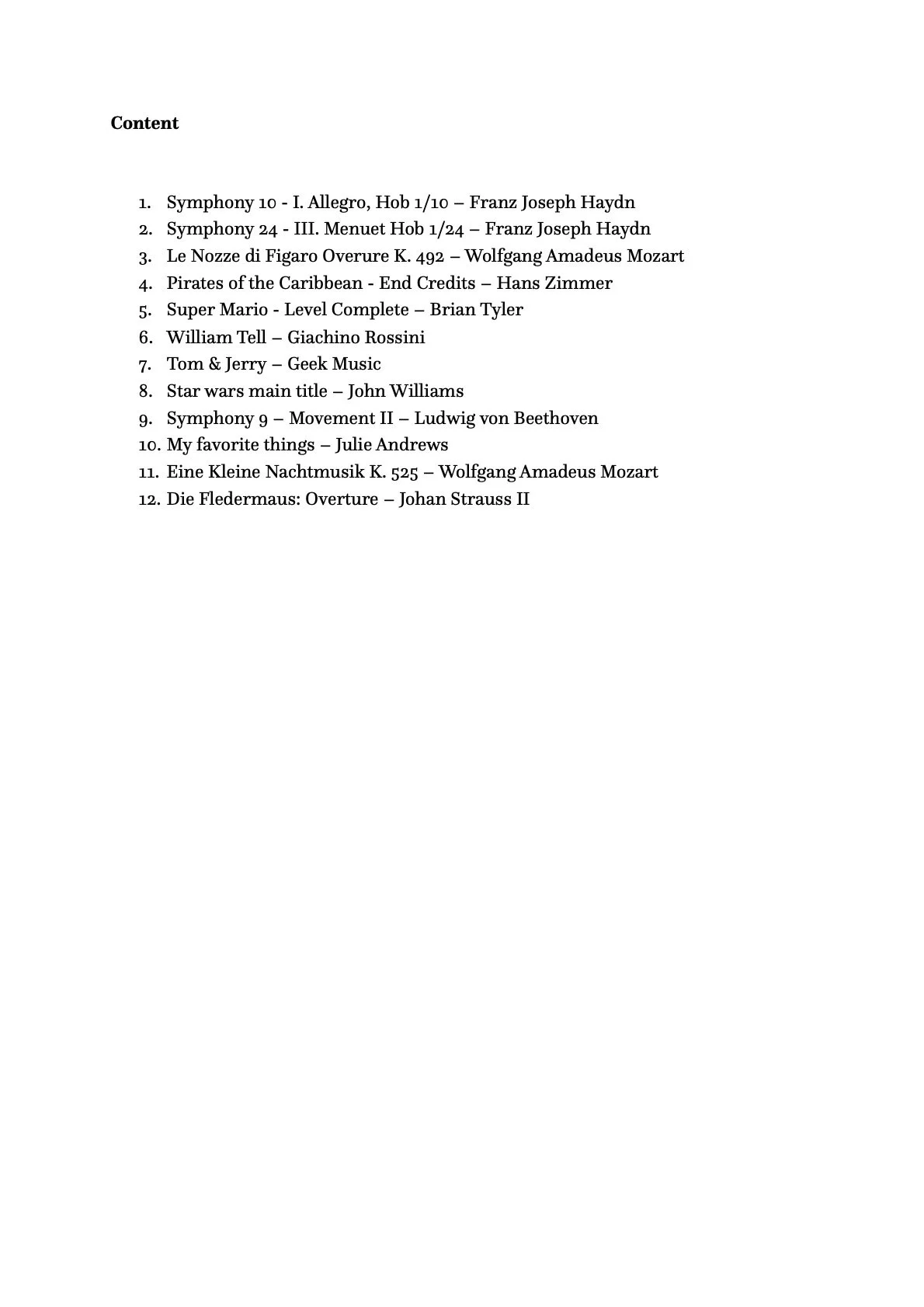
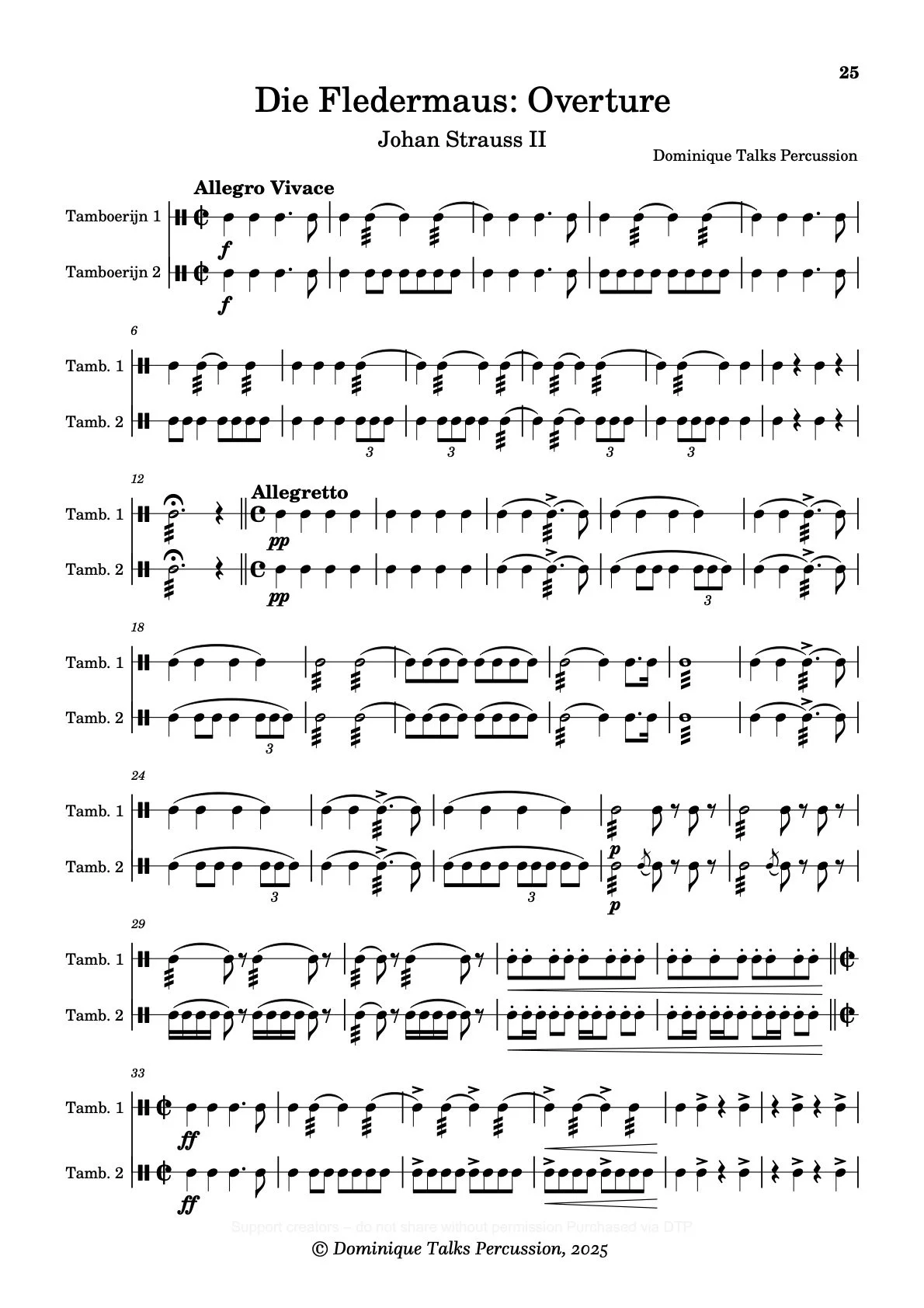
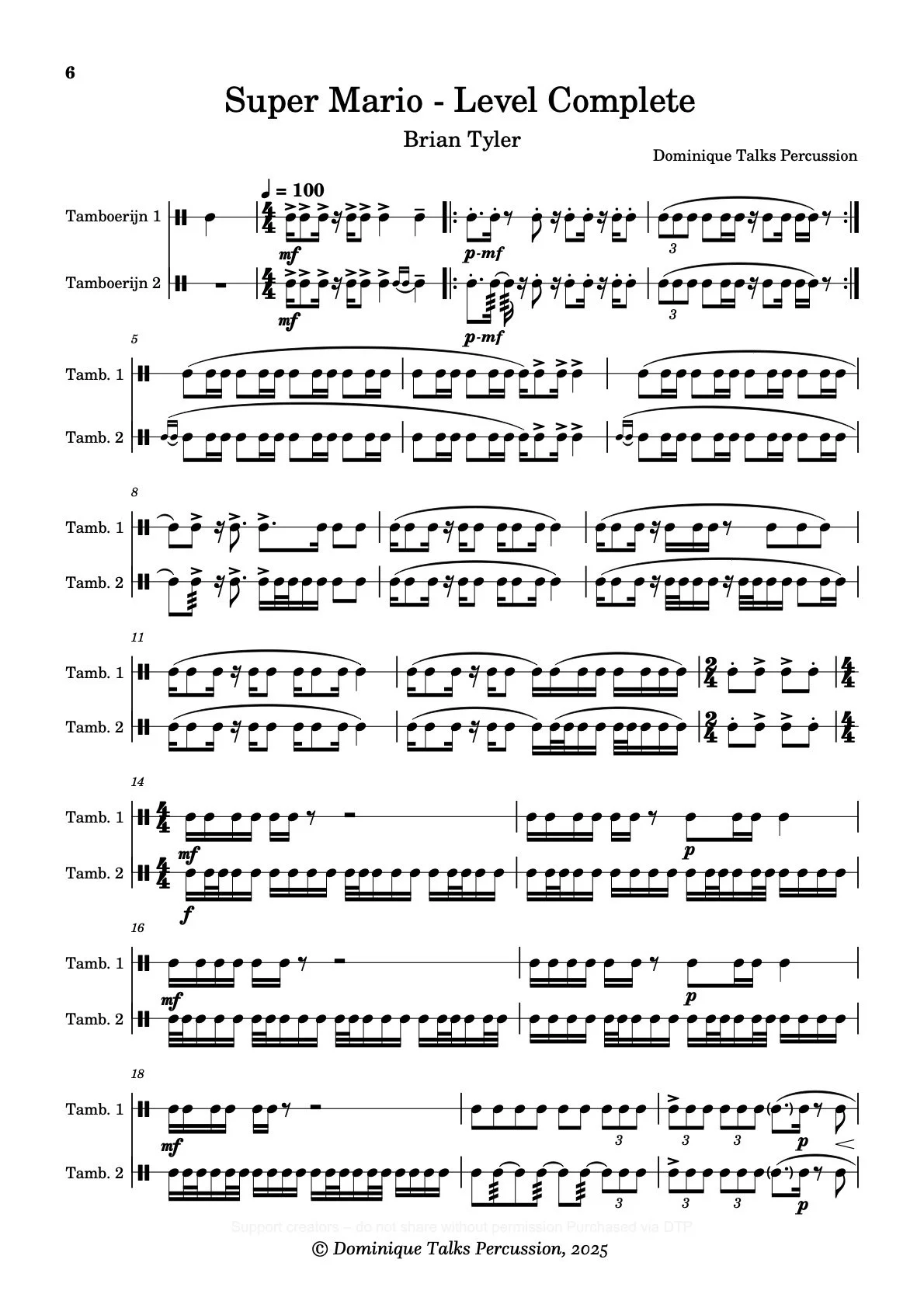
Real music studies — from Haydn to film scores
40-page exclusive exercise book included
Subtitles in 9 languages
Exclusive bonus
Included: The Art of the Tambourine — Exercise Book
A 40-page structured study book designed to connect technique and music.
Only available inside this course.
Scroll down for a preview lesson!


Preview
Lesson 1: Holding the tambourine & posture
IN THIS LESSON
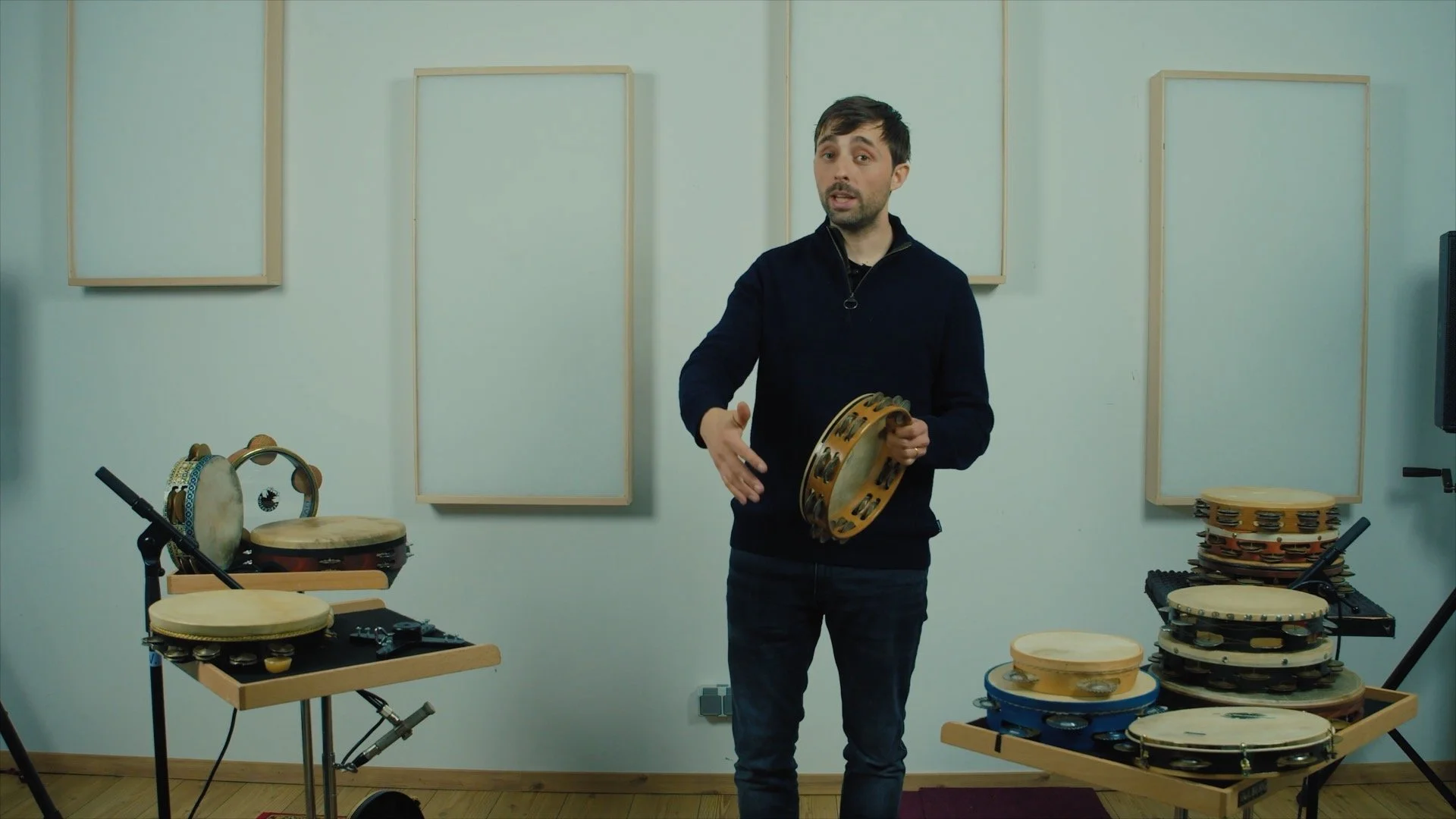
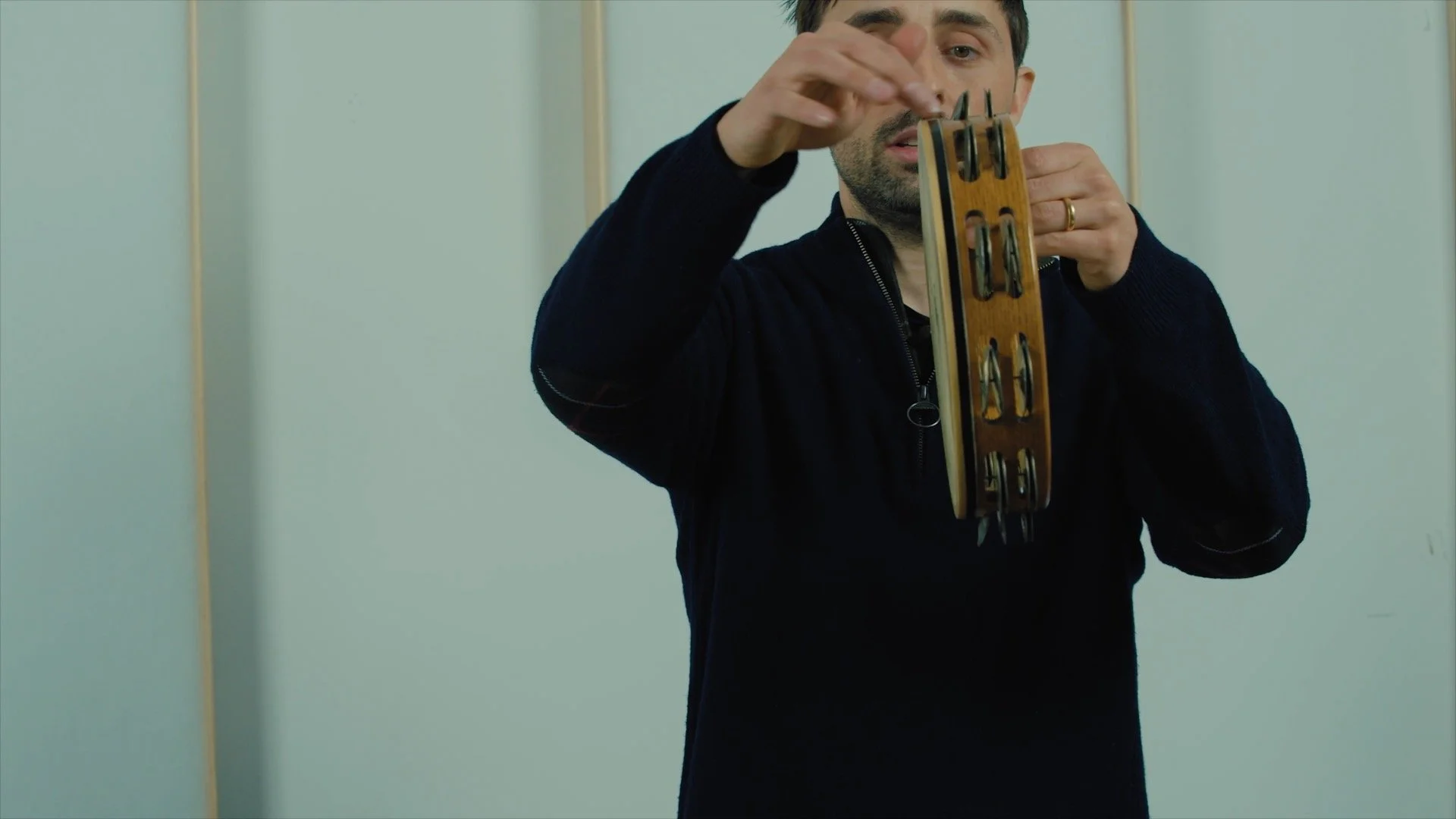
Chapter 1 – Playing Position and Holding the Tambourine
How you hold the tambourine is perhaps the most important thing to understand. As percussionists, we play a wide range of instruments, each with its own unique character and response. The jingles of the tambourine react differently depending on the angle and position of the instrument.
In this chapter, we focus on finding a stable and natural playing position. You’ll learn how to stand, how to distribute your weight, and how to hold the tambourine in a way that gives you maximum control over both tone and resonance. A good posture forms the foundation for all techniques that will follow in the next chapters.
-
-
Before we start
Welcome — and thank you for joining the Complete Tambourine Course! I’m really happy you’ve decided to start this journey.
On this page, you’ll find everything you need to get started.
Welcome — and thank you for joining the Complete Tambourine Course! I’m really happy you’ve decided to start this journey.
On this page, you’ll find everything you need to get started.
-
Lesson 1: Holding the tambourine & posture
We begin by focusing on the fundamentals: our body posture, how to hold the tambourine, and all essential techniques needed for a solid foundational playing method.
We begin by focusing on the fundamentals: our body posture, how to hold the tambourine, and all essential techniques needed for a solid foundational playing method.
-
-
-
Lesson 2.1: Woodpecker technique
The Woodpecker is one of the most fundamental tambourine techniques. It’s the simplest motion we have, yet incredibly versatile. With this technique, you can already play most basic rhythms — low or fast, soft or loud
The Woodpecker is one of the most fundamental tambourine techniques. It’s the simplest motion we have, yet incredibly versatile. With this technique, you can already play most basic rhythms — low or fast, soft or loud
-
Lesson 2.2: Split hand technique
Our hand can be divided into two distinct sections, enabling us to play faster and with more virtuosity.
Our hand can be divided into two distinct sections, enabling us to play faster and with more virtuosity.
-
Lesson 2.3: The arched split hand technique
We learn how to divide our hand into two sections for soft playing.
We learn how to divide our hand into two sections for soft playing.
-
Learn how to play fast in soft dynamics.
-
-
-
Lesson 3.1: Finger rolls - thumb roll and basics
The finger roll technique is probably the one I get the most questions about. Many players struggle to make it sound smooth and consistent. Let’s dive into this technique
The finger roll technique is probably the one I get the most questions about. Many players struggle to make it sound smooth and consistent. Let’s dive into this technique
-
Why waxing the tambourine is not your magic solution!
-
Lesson 3.3: Rolling with all fingers
In this lesson, we’ll explore finger rolls with all fingers, focusing on developing a natural feel and control through curiosity and balance.
In this lesson, we’ll explore finger rolls with all fingers, focusing on developing a natural feel and control through curiosity and balance.
-
Lesson 3.4: Long thumb roll
Lot of people struggle with a soft long thumb roll, let’s have a look at this together.
Lot of people struggle with a soft long thumb roll, let’s have a look at this together.
-
Lesson 3.5: Combining rolls with other techniques
In this lesson, we’ll learn how to combine rolls with other techniques to create smooth transitions and dynamic contrasts.
In this lesson, we’ll learn how to combine rolls with other techniques to create smooth transitions and dynamic contrasts.
-
Lesson 3.6: Advanced backward thumbroll
The finger roll technique is probably the one I get the most questions about. Many players struggle to make it sound smooth and consistent. Let’s dive into this technique
The finger roll technique is probably the one I get the most questions about. Many players struggle to make it sound smooth and consistent. Let’s dive into this technique
-
Lesson 3.7: Shake rolls
Shake rolls! Time to train our left arm and learn different ways of playing the shake roll.
Shake rolls! Time to train our left arm and learn different ways of playing the shake roll.
-
-
-
Lesson 4.1: Extended techniques
Discover fun and surprising extended techniques from around the world – little tricks that expand your sound and help you play with more creativity, both in solo and orchestral pieces.
Discover fun and surprising extended techniques from around the world – little tricks that expand your sound and help you play with more creativity, both in solo and orchestral pieces.
-
Lesson 4.2: Different Tambourines and southern European styles
Discover the unique sounds of different tambourines and the techniques of Southern European traditions.
Discover the unique sounds of different tambourines and the techniques of Southern European traditions.
-
Lesson 4.3: From pandeiro to pump tambourine – techniques from around the world
Discover new techniques — from the Brazilian pandeiro to innovative instruments with unique tuning systems. Learn how global playing styles can enrich your classical technique and open new ways of expressing rhythm.
Discover new techniques — from the Brazilian pandeiro to innovative instruments with unique tuning systems. Learn how global playing styles can enrich your classical technique and open new ways of expressing rhythm.
-
Lesson 4.4: An introduction to Riq tambourine
Discover Riq techniques from Middle Eastern traditions — learn how to create rich rhythms, subtle shakes, and expressive tones that can inspire your classical tambourine playing.
Discover Riq techniques from Middle Eastern traditions — learn how to create rich rhythms, subtle shakes, and expressive tones that can inspire your classical tambourine playing.
-
Tambourine playing is not about tricks.
It is about sound, balance, and character.
I hope this course helps you discover your own voice on the instrument.
— Dominique